
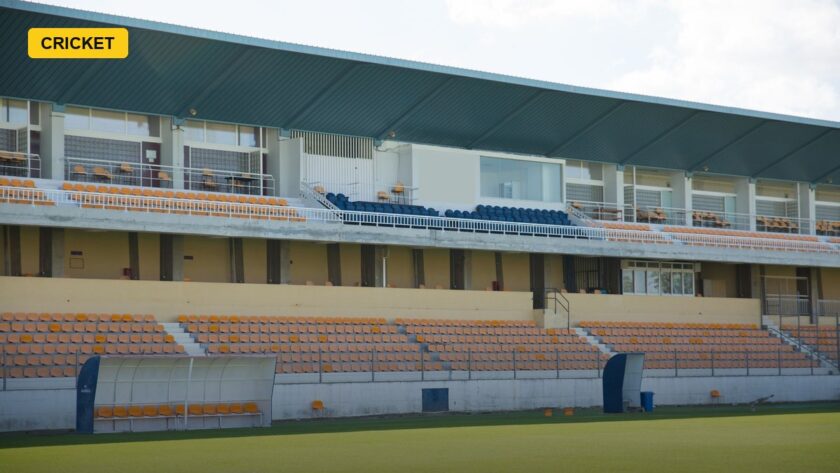
Cricket’s return to the Olympic Games after a 128-year absence is moving from concept to construction, with the International Olympic Committee confirming the Fairgrounds in Pomona, roughly 50 kilometers from downtown Los Angeles, as the purpose-built venue that will host the sport’s 2028 Olympic competition. The temporary stadium will stage both men’s and women’s T20 tournaments, marking cricket’s first appearance at the Games since a single match at the 1900 Paris Olympics.
How Cricket Got Back Into the Olympics
The International Olympic Committee approved cricket’s inclusion for the LA28 Games in October 2023, alongside flag football, lacrosse, and the return of baseball and softball, as part of a broader push by Olympic organizers to add sports with strong existing fan bases and commercial potential in markets the Games are trying to grow. Cricket’s enormous popularity across South Asia, where the sport commands television audiences that dwarf most other Olympic disciplines, made it an attractive addition for organizers looking to boost global viewership figures.
Why a Temporary Stadium in Pomona
Rather than retrofitting an existing Los Angeles-area stadium, organizers opted to build a temporary, purpose-built venue specifically for cricket at the Fairgrounds, a decision that reflects both the specific dimensions and outfield requirements cricket demands and the practical reality that few existing Southern California venues could be adapted cost-effectively. Temporary Olympic venues have become increasingly common across recent Games as organizers try to control costs and avoid the kind of expensive, underused legacy infrastructure that burdened earlier Olympic host cities.
Format Details Still Being Finalized
While T20 has been confirmed as the format for cricket’s Olympic return, given its appeal for a tight Olympic broadcast window, the final number of competing teams and qualification pathways for both the men’s and women’s tournaments remain subjects of ongoing discussion between the ICC and Olympic organizers, with six teams per gender widely reported as the likely field size. That relatively small field will create intense competition among cricket’s second and third tier nations for qualification spots, since automatic qualification is expected to be reserved for only a handful of the sport’s top-ranked teams.
What Olympic Inclusion Could Mean for Cricket’s Global Growth
Cricket administrators have long argued that Olympic inclusion could be transformative for growing the sport in markets where it currently has minimal profile, since Olympic participation typically unlocks national government funding and sports infrastructure investment that cricket federations in non-traditional markets have historically struggled to access through the ICC’s own development programs alone. Countries like the United States, itself a growing cricket market following Major League Cricket’s launch, could see accelerated domestic investment tied specifically to Olympic ambitions.
Skeptics Question Whether T20 Olympic Cricket Will Resonate
Some traditionalists within cricket have expressed skepticism that a brief T20 tournament squeezed into the Olympic calendar can meaningfully showcase the sport to new audiences, particularly compared to the depth and narrative complexity of Test cricket or even bilateral ODI series, and have questioned whether the biggest cricket nations will prioritize sending their strongest available squads to an Olympic tournament that falls outside the sport’s traditional major event calendar. How seriously India, Australia, and England treat squad selection for LA28 will be an early indicator of how much genuine priority the cricket world places on Olympic success.
What’s Next
With the venue now confirmed, attention turns to finalizing qualification formats and team numbers well ahead of the 2028 Games, a process that will shape which cricket nations outside the traditional powers get a realistic shot at Olympic representation. The Pomona venue’s construction timeline and cricket’s broader integration into LA28’s marketing will offer the next concrete signals of how central a role organizers expect the sport to play in the Games.
Photo: Kampus Production / PEXELS via Pexels