
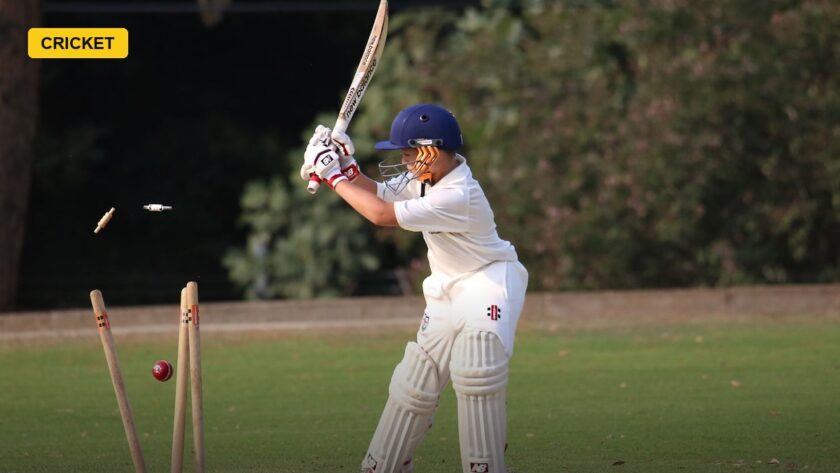
A batter in the Nepal Premier League was given out for deliberately hitting the ball twice during his innings, one of the rarest dismissal modes in cricket’s laws and an event uncommon enough to generate significant discussion among fans and commentators unfamiliar with seeing the rule actually applied in a competitive match. The dismissal offers a useful occasion to revisit a law most cricket followers know exists in theory but have rarely, if ever, witnessed enforced.
What the Law Actually Says
Cricket’s laws permit a batter to hit the ball a second time only in specific defensive circumstances, primarily to protect their wicket from being struck by the ball after an initial contact, such as knocking the ball away from the stumps after it has already struck the bat or pad. Any deliberate second strike intended to score additional runs, rather than purely for wicket protection, renders the batter out, a distinction that requires umpires to make a judgment call about the batter’s intent behind the second contact.
Why the Dismissal Is So Rare
Most batters never find themselves in a situation where striking the ball twice becomes either necessary or tempting, since the circumstances that would prompt a second deliberate hit, typically a ball that has deflected in an unusual direction near the stumps with a clear scoring opportunity, arise only occasionally across the hundreds of thousands of deliveries bowled in professional cricket each year. The law’s rarity in practical application means many players and even some officials have limited direct experience interpreting the specific intent-based standard involved.
The Umpiring Decision
Making this specific dismissal call requires the on-field umpire to assess the batter’s apparent intent in real time, a more subjective judgment than many other dismissal modes that rely on more straightforward factual determinations like whether the ball carried to a fielder or whether the bat made contact before the ball struck the pad. The Nepal Premier League umpire’s decision in this instance will likely be studied by officials elsewhere as a reference case given how infrequently the situation arises in any competitive match anywhere in the cricketing world.
Historical Context
Dismissals for hitting the ball twice have occurred only a handful of times across the recorded history of international and significant domestic cricket, making each instance notable enough to generate discussion well beyond the match and tournament in which it occurs. Cricket statisticians and law enthusiasts tend to treat each occurrence as a point of historical record given the dismissal mode’s extreme rarity compared to more common forms of dismissal like being bowled, caught, or leg before wicket.
Reaction From Players and Commentators
Commentary and reaction to the dismissal has reflected a mix of genuine surprise at witnessing the rule applied and admiration for the umpire’s willingness to make a confident, correct call under a law that offers little practical reference experience to draw upon. Former players commenting on the incident have generally noted that the correct decision, however rarely applied, reflects well on umpiring standards in the tournament.
What’s Next
The dismissal is likely to be referenced in cricket law discussions and umpiring training materials going forward as a useful real-world example of the rule in practice, even as the broader Nepal Premier League tournament continues with far more conventional dismissals dominating the remainder of its fixtures.
Photo: Patrick Case / PEXELS via Pexels