
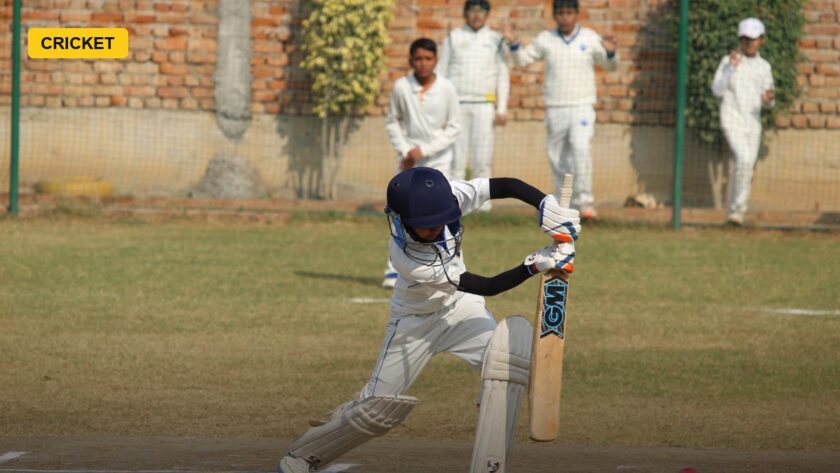
India’s men’s U19 side won a nerve-shredding final against Pakistan by one wicket in Al Amerat, Oman, on November 14, sealing a record-extending ninth Asia Cup title at this age-group level. The win capped a tournament dominated by opener Aaryavir Sehwag, who finished as the event’s leading run-scorer with 361 runs, and comes barely nine months after this same age-group produced India’s Under-19 World Cup-winning squad in February 2026.
A Final Decided in the Closing Overs
Chasing a competitive target set by Pakistan, India’s innings swung repeatedly before the match came down to the final pair at the crease. The one-wicket margin made it one of the tightest finishes in the tournament’s history and underlined how evenly matched the two age-group sides have become in recent editions, where results have increasingly been decided in the last five overs rather than settled early in the chase. Wickets fell in clusters through the middle overs as Pakistan’s bowlers found reverse swing under lights, and India’s lower order had to dig in against a field set aggressively for the mistake that never came.
Sehwag’s Tournament
Aaryavir Sehwag’s 361 runs across the tournament placed him well clear of the next-best scorer and included a string of starts converted into substantial innings against Nepal and in the knockout rounds. His form through the group stage, including a 10-wicket win over Nepal on November 6 in which he anchored the chase, set the tone for an Indian campaign built around top-order control rather than late-innings fireworks, a shift in approach from previous editions that leaned more heavily on finishers. Coaches travelling with the squad have pointed to his shot selection against spin in particular as the standout technical improvement from earlier age-group tournaments. He also carried the weight of expectation that comes with his surname, something teammates say he addressed by leaning into a more conservative role at the top of the order rather than attempting to match his father’s famously aggressive strokeplay, an adjustment the team’s batting coach has described as central to his consistency across the tournament.
BCCI’s Age-Group Pipeline
The win is being read by domestic observers as further evidence of the BCCI’s deliberate multi-team strategy at age-group level, which now runs parallel India A and India B sides through tri-series and bilateral fixtures specifically to widen the pool of players ready for international age-group cricket. That structure produced the squad that won the U19 World Cup in February and has now produced back-to-back continental and global titles within a single calendar year, a run domestic administrators have cited as validation of the investment in additional age-group fixtures over the past three seasons.
Modi’s Message and Wider Reaction
Prime Minister Narendra Modi congratulated the squad publicly following the win, a gesture that has become customary for age-group triumphs but one that reflects the growing profile of U19 cricket in India as a proving ground widely watched for future India stars. Several players from the squad are already being tracked by IPL franchises ahead of future auctions, a pattern established by previous U19 Asia Cup and World Cup-winning cohorts, many of whom have gone on to command significant interest within a year or two of their age-group exploits.
Two Perspectives on the Result
Supporters of India’s age-group system point to the ninth Asia Cup title as proof the pipeline is working exactly as intended, converting strength in numbers into consistent silverware across multiple formats and age brackets. Skeptics within Pakistan’s cricket set-up have pointed instead to the margin of the result, one wicket, as evidence the gap between the sides is far narrower than the trophy count suggests, and that better execution in the final overs, particularly in the field, would have flipped the result in Pakistan’s favour.
Looking Ahead
With the Asia Cup won, attention turns to India’s parallel U19 women’s tri-series against Nepal, running at the BCCI Centre of Excellence in Bengaluru through November 22 as preparation for the 2027 Women’s U19 T20 World Cup. For the men’s side, selectors will now begin assessing which members of this squad progress into India A reckoning over the coming domestic season, with several already named in provisional lists for upcoming India A fixtures. Coaching staff have also flagged the bowling attack’s contribution to the title run, noting that tight death bowling in the group stage set up the margin the batting unit eventually needed in the final.
Photo: Inderjeet Kashyap / PEXELS via Pexels