
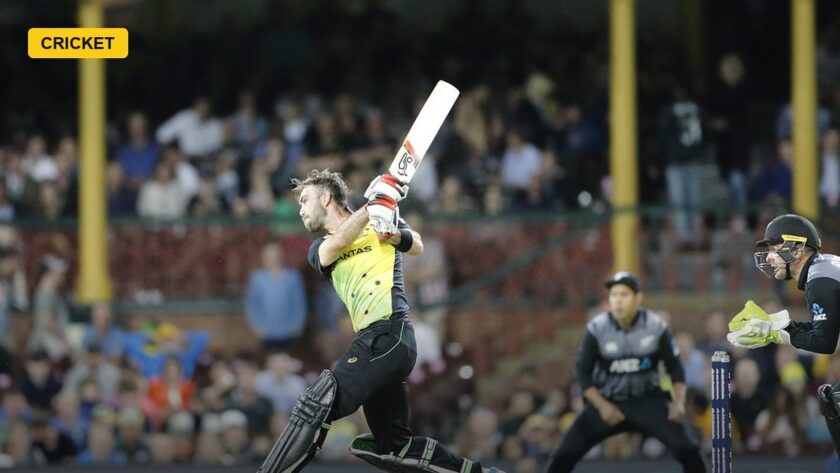
Glenn Maxwell has announced his retirement from international cricket, bringing an end to a career spanning 149 ODIs, 130 T20Is and 7 Tests for Australia, confirming the news in early November via a podcast appearance rather than a formal press conference. The 38-year-old all-rounder, who had already stepped away from one-day internationals in June 2025, is also retiring from Victoria’s domestic 50-over and four-day cricket, though he intends to continue playing franchise Twenty20 cricket, including the Big Bash League.
A Career Built on Unpredictability
Across formats, Maxwell scored 3,990 ODI runs at an average of 33.81 and a strike rate of 126.70, and 2,897 T20I runs at a strike rate of 154.42 while also taking 51 wickets in the shortest format, numbers that only partly capture a playing style built around improvisation as much as orthodox technique. Nicknamed “The Big Show,” Maxwell built his reputation on an ability to manufacture boundaries from deliveries most batters would simply defend, a trait that made him both a fan favorite and, at times, a source of frustration for team management when the same approach produced a rash dismissal rather than a match-turning cameo.
The Afghanistan Innings That Defined a Career
No single innings captured Maxwell’s career better than his unbeaten 201 against Afghanistan at the 2023 World Cup, an innings played while cramping severely enough that he could barely run, yet one that dragged Australia to an improbable victory from a near-impossible position. That knock has become shorthand for the Maxwell experience: equal parts physical struggle, sheer audacity, and a result that only he seemed capable of delivering, and it will likely headline any highlight reel marking the end of his international career.
Fitness Concerns Behind the Decision
Maxwell has pointed to the physical toll of managing his body as a central factor in the timing of his retirement, a theme that has followed him through recent seasons as injuries increasingly interrupted his playing time across formats. Rather than push through a slow physical decline across another full international cycle, he has opted to step away from the international game entirely while continuing in the less physically taxing, shorter-format world of franchise T20 cricket, where Twenty20 leagues like the BBL place a lighter cumulative workload on an aging body than a full slate of Tests, ODIs and T20Is.
A Reluctant Goodbye Without an MCG Farewell
Reports around the announcement note that Maxwell had hoped for a send-off in front of his home crowd at the MCG, a fitting stage given his standing as one of Victoria’s most recognizable modern cricketers, but the timing and manner of his retirement meant that particular farewell did not materialize. Cricket Australia’s leadership has publicly credited him with drawing crowds who came specifically to watch him bat and inspiring a generation of young players to pick up a bat in the first place, underlining the gap his international absence will leave even as the T20 franchise chapter of his career continues.
The End of an Era for Australia’s Middle Order
Maxwell’s retirement adds to a broader generational shift already underway in Australian cricket, with the national team’s selectors increasingly turning to a younger core of players across formats even as senior figures like Maxwell step back. His departure leaves a void in the finishing and middle-overs role he carved out over more than a decade, a position that demanded both batting range and, in white-ball cricket especially, canny part-time off-spin, a dual skill set that is not easily replaced by a single successor.
Two Views on His Legacy
Admirers of Maxwell’s career argue that his willingness to take risks other players would not attempt made him one of the most entertaining cricketers of his generation, a genuine match-winner whose statistical averages understate his actual impact on games he turned with a single over of hitting. Critics have long countered that his inconsistency, the flip side of that same high-risk approach, meant Australia could never fully rely on him in tighter, lower-scoring contests, and that a player with his natural talent might have left an even larger statistical legacy with a more conservative approach in certain match situations. Both camps are likely to keep debating that trade-off long after his final international appearance.
With international duty now behind him, Maxwell’s immediate future centers on continuing to play Twenty20 franchise cricket, including a push to represent Victoria’s BBL franchise in the season ahead, while Australian selectors turn their attention to identifying who will inherit the unconventional middle-order role he leaves vacant across the white-ball formats.