
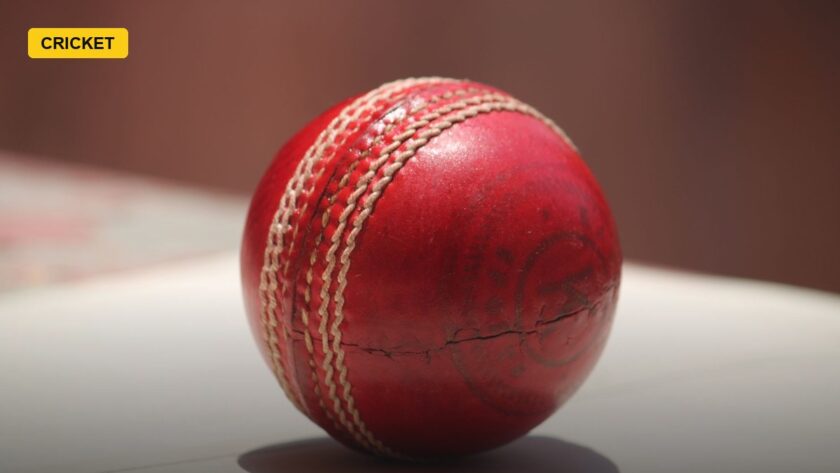
A row that Australian cricket thought had been closed for good erupted again in November 2026 after Usman Khawaja used his new autobiography to claim the entire Australian team was aware of the plan to tamper with the ball during the infamous 2018 Cape Town Test against South Africa. David Warner, one of the three players sanctioned over the incident alongside Cameron Bancroft and then-captain Steve Smith, publicly backed Khawaja’s account within days of the book’s release, accusing Cricket Australia of running a cover-up and reigniting a scandal that cost him the national vice-captaincy and a leadership ban that still stands nearly eight years later.
Khawaja’s book reopens a wound from Cape Town
Khawaja’s claims, published ahead of his autobiography’s release in the first full week of November, allege that players beyond the three officially sanctioned knew sandpaper was being used to alter the ball’s condition during the third Test at Newlands. Khawaja was part of that Australian squad and has said he was never formally interviewed as part of Cricket Australia’s investigation at the time, despite being present in the dressing room alongside Bancroft, Smith and Warner. His account effectively argues that the governing body’s 2018 inquiry, which produced bans of nine and twelve months for Smith and Warner respectively and a nine-month ban for Bancroft, scapegoated a smaller group while leaving broader knowledge of the plan unexamined.
Warner calls the investigation a cover-up
Warner, speaking out in the days after the book’s release, said Khawaja’s version of events was accurate and praised him for having the courage to revisit a painful chapter publicly. He went further, describing Cricket Australia’s original handling of the scandal as a cover-up and arguing he was not properly given the chance to explain the full context of what happened in Cape Town. Warner has carried the harshest individual penalty of the three since 2018 — he remains banned for life from holding a Cricket Australia leadership position, a sanction neither Smith nor Bancroft received in the same form, and one he has periodically and unsuccessfully petitioned to have reviewed.
Cummins rejects the claims at a November 13 press conference
Australia’s Test captain Pat Cummins, who was part of the same playing group in South Africa in 2018, pushed back directly at a press conference on November 13, calling Khawaja’s latest claims “100 percent wrong.” Warner responded by accusing Cummins of throwing Khawaja “under the bus,” arguing that the current captain had both the standing and the responsibility to engage with the substance of Khawaja’s account rather than dismiss it outright. The public disagreement between a sitting national captain and two senior former teammates over an eight-year-old scandal has made the story impossible for Cricket Australia to simply wait out.
Cricket Australia holds the line on reopening the case
Cricket Australia has ruled out reopening its investigation into the 2018 incident, a position the governing body has maintained consistently since Warner first raised objections to his lifetime leadership ban in earlier years. That stance puts the board at odds with two of the three originally sanctioned players and leaves unresolved the central question Khawaja’s book poses: whether the 2018 inquiry’s scope was too narrow from the outset. Former Australian batter Nic Maddinson, among other past players to weigh in publicly, said he found the latest round of comments disappointing, while noting that Khawaja has a commercial interest in generating attention for a book he is actively promoting.
Why the timing matters for Australian cricket
The row has resurfaced at a sensitive moment, with Cummins leading Australia through a packed home and away Test calendar and Smith still a senior figure in the squad as a specialist batter. A prolonged public dispute over who knew what in 2018 risks becoming a distraction inside a dressing room that includes several players from that era, even as Cricket Australia tries to keep its focus on upcoming series rather than relitigating Sandpapergate. The episode is also a reminder of how differently the four men involved have processed the scandal: Smith and Bancroft have largely avoided reigniting it publicly, while Warner has pursued vindication for years and Khawaja, an unsanctioned bystander at the time, has emerged as an unexpected new voice in the story.
With Cricket Australia declining to revisit its findings and Cummins standing by his account, the dispute looks set to remain a war of public statements rather than a formal reinvestigation. How much oxygen the story continues to draw will likely depend on whether other members of the 2018 touring party — several of whom have stayed silent so far — decide to corroborate either side’s version before the news cycle moves on.
Photo: Manoj Poosam / PEXELS via Pexels