
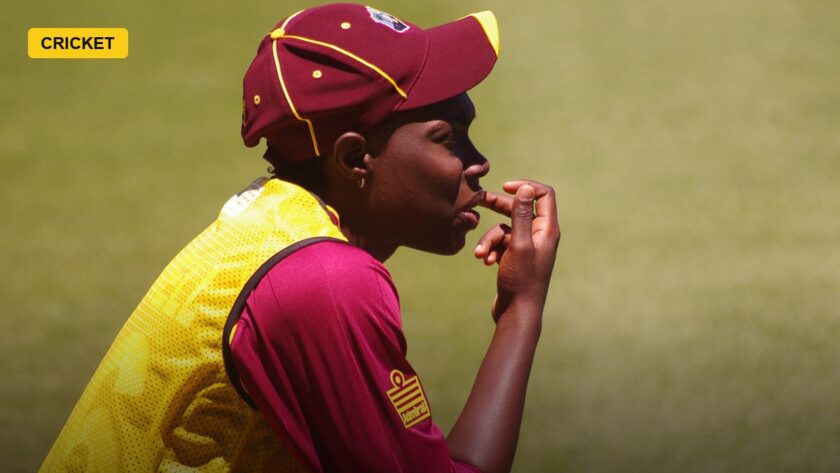
The second edition of the ICC Women’s Emerging Nations Trophy, running in Ajman, UAE, from November 12 to 25, has reached its business end after four days of group-stage cricket across two venues, the Karwan Sports Club and the Seven Districts Sports Club. Pakistan and Sri Lanka have emerged as the two form sides of the tournament, with Pakistan topping Group B and Sri Lanka winning all four of their completed group matches to lead Group A, sending both through to the Super Six stage.
A tournament doubled in size
This year’s Emerging Nations Trophy expanded from eight teams to ten, a significant step up for an event that crowned Thailand as its inaugural champions on home soil in 2025. The expansion brought five Full Member sides — Sri Lanka, Bangladesh, Pakistan, Zimbabwe and Ireland — into the same bracket as Associate nations the Netherlands, Scotland, Thailand, the UAE and Papua New Guinea, all competing in the T20I format across two groups of five. The format is designed explicitly to accelerate player development, giving emerging squads from Full Member boards regular competitive cricket against Associate sides that have shown they can compete at this level.
Pakistan’s route through Group B
Pakistan, captained by Muneeba Ali with Ayesha Zafar as vice-captain in the absence of regular skipper Fatima Sana, who is currently playing in the Women’s Big Bash League, opened their campaign with an eight-wicket win over Bangladesh before following up with a 24-run victory over Thailand. Their only blemish came against the Netherlands, who beat Pakistan by eight wickets in a result that underlined the Dutch side’s growing competitiveness in the Associate ranks. Pakistan responded by beating Zimbabwe by 51 runs, a result that was enough to confirm top spot in Group B and a place in the Super Six.
Sri Lanka’s perfect record in Group A
While Pakistan navigated one defeat on their way through, Sri Lanka have been the tournament’s most consistent side, winning every one of their group matches. They began with a dominant ten-wicket victory over Ireland, followed that with a four-wicket win over Scotland, then beat Papua New Guinea by 67 runs before closing out their group fixtures with a further win by five wickets. The margin of victory in several of those matches — particularly the ten-wicket opening win — reflects the gap in experience between a Full Member emerging squad and several of the Associate sides in their group.
The Netherlands and the Associate challenge
If there has been one storyline cutting across both groups, it is the rise of the Netherlands as the tournament’s most dangerous Associate side. The Dutch won their first three group matches, including victories over Thailand, Pakistan and Bangladesh, establishing themselves as genuine contenders for a podium finish rather than making up the numbers. Their win over Pakistan in particular will be the result emerging squads from other Full Member nations look at most closely, since it shows an Associate side capable of beating Full Member opposition even in a development-focused tournament.
Why the expanded event matters
For boards like Bangladesh and Zimbabwe, whose senior women’s teams have had limited exposure to high-pressure global tournament cricket, the Emerging Nations Trophy offers a proving ground for fringe players to force their way into full international reckoning. Pakistan’s decision to field vice-captain Ayesha Zafar in place of first-choice captain Fatima Sana, who remains occupied with Women’s Big Bash League commitments, illustrates how boards are using the tournament to develop depth and succession options rather than simply fielding their strongest available XI. For the Associate nations, meanwhile, a strong showing against Full Member opposition — as the Netherlands have provided — carries real weight in their push for more fixtures against bigger cricketing nations.
Looking ahead to the Super Six and final
With Pakistan and Sri Lanka through as group leaders, attention now turns to the Super Six phase, where results will be carried forward against the other qualifiers from both groups as the ten-team field narrows toward the final, set for November 25 at the Karwan Sports Club. The Netherlands’ form makes them the Associate side most likely to disrupt a straightforward Full Member march to the final, while Pakistan’s single defeat, against the Dutch, means they cannot afford to be complacent in the next phase. Sri Lanka, as the only unbeaten side left in the field, will enter the Super Six as the team to catch.