
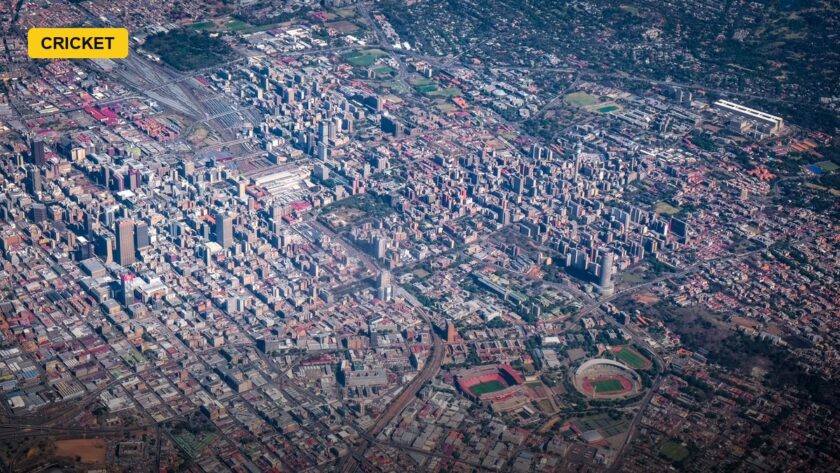
The International Cricket Council finalized its venue list for the 2027 Men’s Cricket World Cup on July 30, 2026, confirming eight grounds in South Africa, three in Zimbabwe and one in Namibia — the full infrastructure map for the first men’s 50-over World Cup ever staged on African soil, more than three decades after South Africa’s return to international cricket in 1991.
A Tournament Spread Across Three Boards
Splitting hosting duties across South Africa, Zimbabwe and Namibia required the ICC to balance stadium capacity, broadcast infrastructure and travel logistics across three separate cricket boards with very different resource levels — South Africa’s Cricket South Africa runs a well-funded, internationally experienced board, while Zimbabwe Cricket and Namibia Cricket operate on far smaller budgets and have leaned on ICC development funding to bring venues up to World Cup standard.
South Africa’s Eight-Venue Backbone
With eight of the twelve venues, South Africa carries the bulk of the tournament, likely including its established major grounds such as the Wanderers in Johannesburg, Newlands in Cape Town and Kingsmead in Durban — stadiums that have hosted ICC events before, including the 2003 World Cup, and that already meet the broadcast and hospitality standards the ICC requires for marquee fixtures like the final.
Zimbabwe and Namibia’s Smaller but Symbolic Role
Zimbabwe’s three venues and Namibia’s single venue carry outsized symbolic weight relative to their match count: both boards have spent recent years rebuilding international credibility after periods of financial and governance turmoil, and hosting World Cup fixtures — even a handful — represents a tangible return on ICC development investment and a chance to showcase upgraded grounds to a global television audience.
The Infrastructure Investment Behind the Announcement
Hosting a 12-venue, multi-nation World Cup requires substantial capital investment in floodlights, drainage, practice facilities and media centers, costs that smaller boards typically cannot cover alone; ICC event hosting agreements generally include development grants tied to meeting minimum venue standards, a model it has used in past expansions of global events to associate and smaller full-member nations.
Why the ICC Wanted Africa
Awarding the World Cup to a three-nation African host was part of a deliberate ICC strategy to grow the sport commercially and grassroots-wise beyond its traditional strongholds, following similar expansion moves like the 2024 T20 World Cup’s joint hosting in the United States and West Indies. Cricket administrators have pointed to South Africa’s existing fan base and Zimbabwe and Namibia’s development potential as justification for the bet, even as some traditionalists have questioned whether splitting hosting across three boards risks logistical strain.
The Broadcast Infrastructure Question
Each of the twelve venues must meet ICC standards not just for player and spectator facilities but for the broadcast infrastructure that generates the bulk of the tournament’s commercial value — fiber connectivity, camera-gantry positions, dedicated power redundancy and international media workspace all have to be built or upgraded well ahead of the event, since global broadcasters sign rights deals years in advance based partly on assurances about production quality. For Zimbabwe’s three venues and Namibia’s single ground, meeting that bar represents a bigger relative leap than it does for South Africa’s already World Cup-tested stadiums, and ICC technical inspection teams have reportedly been working closely with both boards on phased upgrade timelines rather than a single final certification deadline. The stakes of getting it right are significant: a broadcast failure or substandard facility at even one venue could affect the ICC’s ability to deliver the seamless global coverage sponsors are paying for, a risk the governing body has tried to manage by building inspection checkpoints into the lead-up calendar rather than leaving certification to the final months before the tournament begins.
What’s Next
With venues locked in, attention now shifts to the qualification process — including co-host Namibia’s own fight to qualify for the tournament it is helping stage — and to the ICC’s detailed match schedule, expected to be refined as the February-March 2027 qualifier results clarify the final sixteen-team field. Ticketing and travel packages are expected to go on sale in the months following the qualifier, giving fans a clearer picture of which grounds will host the biggest fixtures, including the final.
Photo: Magda Ehlers / PEXELS via Pexels